

The moment you notice significant hair loss, the primary question becomes: Will it grow back? The fear that hair loss is irreversible can be paralyzing. However, the answer is often nuanced and depends entirely on the root cause and the status of the hair follicle itself. At The Elite Aesthetics, we rely on advanced diagnostic tools to determine the precise nature of your hair loss, whether it is temporary, progressive, or permanent, to create a realistic and effective pathway to restoration.
This guide explores the crucial distinction between reversible, progressive, and permanent hair loss, offering clarity on the potential for regrowth and when immediate medical intervention is vital.
The Core Distinction: Reversible vs. Irreversible Hair Loss
The potential for regrowth hinges on one key factor: Is the hair follicle still alive?
The Good News: Temporary Causes (Telogen Effluvium)
If the hair loss is caused by a significant physiological or psychological “shock”, such as major surgery, childbirth, high fever, or a severe nutritional deficiency, the condition is most likely Telogen Effluvium (TE). In TE, the hair follicle is not damaged; it simply enters the resting phase prematurely. Once the underlying trigger is resolved, the follicle will naturally reactivate, and full regrowth is highly likely within 6 to 12 months. This hair loss is completely reversible.
The Challenge: Permanent and Progressive Causes
Hair loss is considered challenging when the follicle is either gradually shrinking (Androgenetic Alopecia) or permanently destroyed (Scarring Alopecia). While progressive conditions can be managed and often significantly reversed with clinical intervention, true permanent loss from scarring means the follicle is gone forever.
Temporary Hair Loss Causes (Reversible)
The following conditions cause shedding, but the hair is expected to return to its previous density once the root cause is addressed.
Stress, Diet, and Vitamins (The Fixable Triggers)
- Severe Crash Dieting/Malnutrition: Rapid weight loss or elimination diets can cause vitamin and protein deficiencies, triggering TE. Restoring balanced nutrition allows regrowth.
- Acute Emotional Stress: A sudden traumatic event or immense, short-term stress can trigger a temporary shed. Reducing stress levels and waiting out the cycle allows the hair to return.
- Medication-Induced: Certain medications (e.g., blood thinners, retinoids, chemotherapy) can cause temporary hair loss. Stopping the medication (under physician supervision) generally leads to a return to normal growth.
Postpartum and Medication-Induced Loss
- Postpartum Effluvium: The hormonal crash after birth is a temporary trigger, and while the shedding is alarming, it is not permanent.
- Anagen Effluvium (Chemotherapy): While hair often sheds rapidly during chemotherapy (because the treatment targets rapidly dividing cells), the follicle structure usually remains intact, and regrowth occurs once treatment ends.
Progressive Hair Loss (Requires Long-Term Management)
These conditions are chronic and will worsen without intervention, but the follicles can often be revived through treatment.
Androgenetic Alopecia (The Follicle Can Be Revived, But Not Cured)
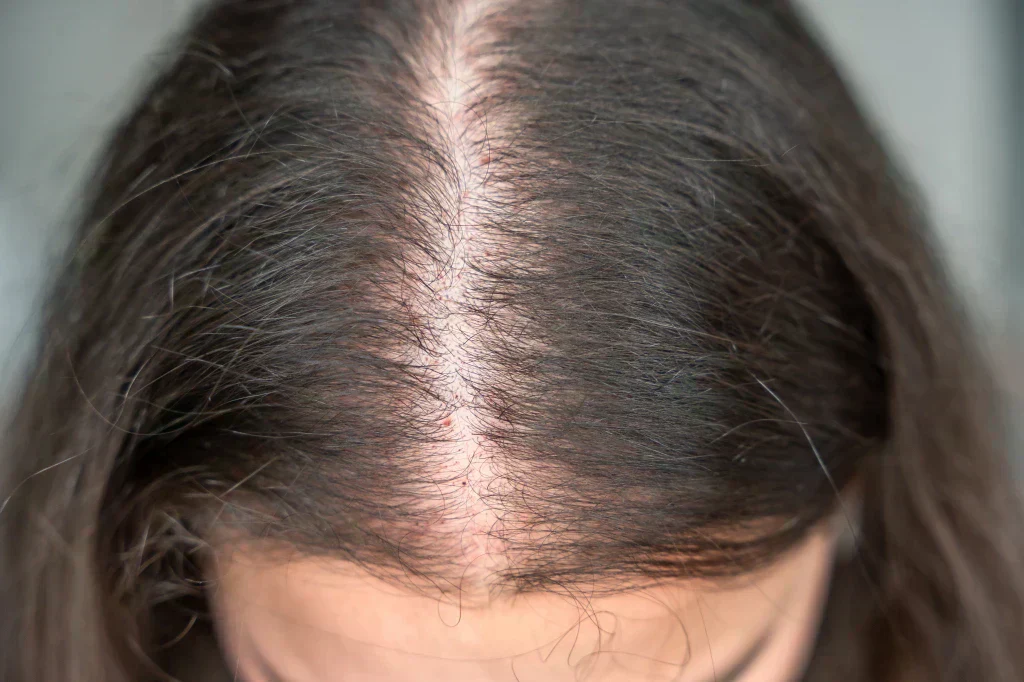
This genetic condition (Male and Female Pattern Baldness) is driven by hormonal sensitivity (DHT) that causes the follicle to miniaturize—it shrinks and produces thinner, shorter hairs. If the follicle is only miniaturized, it is still alive. Clinical treatments can halt the miniaturization and often thicken the hair, making it appear restored. The condition is progressive, meaning the underlying genetic tendency is always present, but the visible effects can be managed.
Non-Surgical Treatments That Halt Progression (PRP, Exosomes)
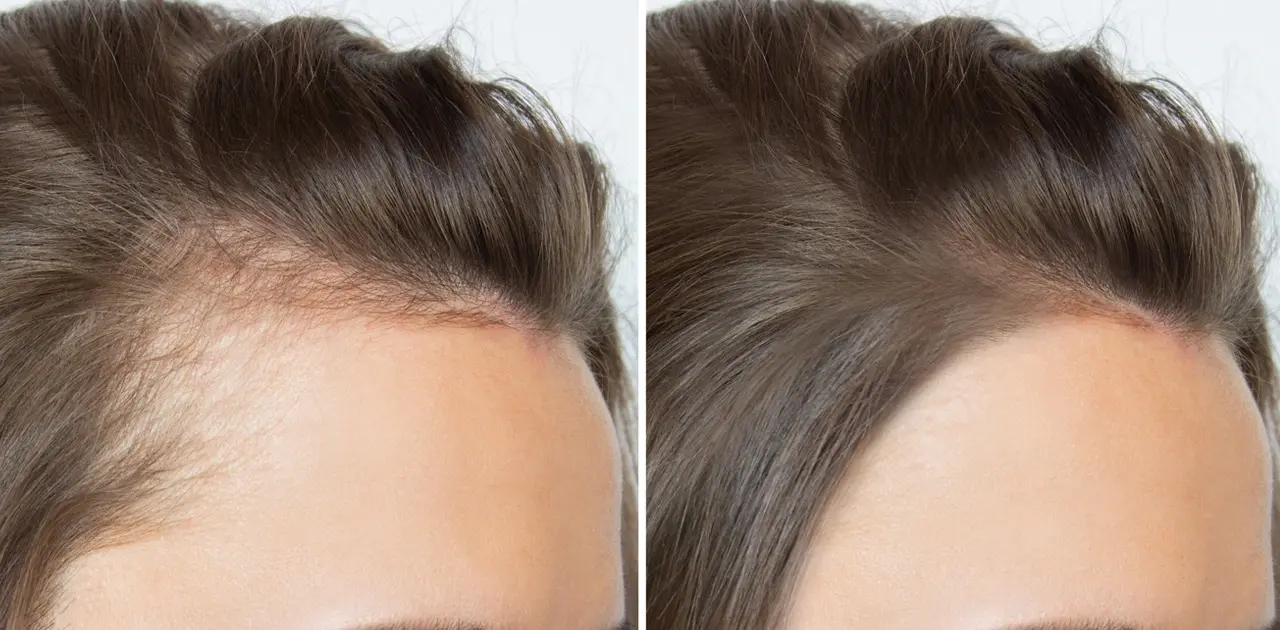
The cornerstone of managing Androgenetic Alopecia is clinical intervention. Platelet-Rich Plasma (PRP) therapy works by bathing the miniaturized follicles in powerful growth factors, reversing the shrinking process and extending the active growth phase. This non-surgical approach is highly effective at rescuing and preserving hair that is still responsive.
Permanent Hair Loss (Irreversible Scarring)
This is the most critical category of hair loss because the follicle structure is destroyed, meaning biological regrowth is not possible in that area.
What is Scarring (Cicatricial) Alopecia?
Scarring alopecia refers to a group of inflammatory disorders where the inflammation permanently destroys the stem cells of the hair follicle and replaces the structure with scar tissue. Examples include Lichen Planopilaris and Discoid Lupus Erythematosus.
When the Hair Follicle is Completely Destroyed
When scar tissue replaces the follicle, the hair loss in that area is considered truly permanent. While medical treatment is vital to control the inflammation and prevent further spreading, clinical treatments like PRP cannot revive tissue that has been replaced by scar tissue. In these cases, the options shift to managing the disease and utilizing transplant surgery in stable, non-inflamed areas.
The Science of Regrowth and Restoration
Our goal at The Elite Aesthetics is to push the follicle back toward the active Anagen phase and keep it there longer.
The Goal of Medspa Treatments: Waking Up Dormant Follicles
For progressive thinning (AGA), the challenge is not generating a new follicle but stimulating the existing, struggling one. Treatments focus on increasing blood flow, reducing inflammation, and delivering essential growth signals to the follicle’s stem cells.
How PRP Delivers Growth Factors to the Scalp
PRP utilizes a client’s own blood, which is centrifuged to concentrate platelets. These platelets are rich in growth factors (like PDGF, TGF-beta, and VEGF) that, when injected directly into the scalp, trigger cellular proliferation and differentiation, effectively extending the growth phase and increasing hair caliber.
Exosome Therapy: Targeting the Follicle’s Communication
Exosomes are tiny lipid vesicles released by stem cells that carry potent signaling molecules. Exosome therapy involves injecting these signals directly into the scalp, which instructs the dormant and miniaturized follicles to “wake up” and begin a robust growth cycle. This is a cutting-edge technique used to maximize the potential for regrowth.
Q&A on Hair Regrowth Potential
Q: If I have had thinning for 10 years, are my follicles still alive?
A: Possibly, but they are likely heavily miniaturized. Most people retain responsive, though shrunken, follicles for decades. However, if the area is completely smooth and shiny (indicating potential scarring), the viability drops significantly. A specialized trichoscopy performed at our medspa can give you a definitive answer on the follicle count and health.
Q: Can I stop using PRP treatments once my hair regrows?
A: If your hair loss is due to a reversible cause (TE), yes. If your hair loss is genetic (AGA), the progression will likely resume once treatments cease because the underlying hormonal and genetic sensitivity remains. For AGA, PRP is part of a long-term management protocol, with maintenance treatments typically required every 6–12 months.
Q: How long does it take to confirm if my hair loss is permanent or not?
A: For reversible causes like acute TE, you should see noticeable regrowth 6–9 months after the trigger is resolved. For progressive conditions, a medical professional can diagnose the type of loss immediately via examination and testing. If the specialist suspects a Scarring Alopecia (permanent loss), a small biopsy may be required to confirm the diagnosis and prevent further spread.