
Catching hair loss early is the single most critical factor in achieving successful non-surgical restoration. The longer a hair follicle remains dormant or miniaturized, the harder it is to revive. Identifying the subtle, early signs of pattern baldness, before significant volume is lost, empowers you to seek preventative treatment and preserve your current density.
At The Elite Aesthetics, we specialize in recognizing these initial warnings and immediately initiating therapies, like PRP, to stop progression in its tracks. Here are the five key signs of early balding and why intervention now is crucial.
Warning 1: The Widening Part Line (Often the First Sign in Women)
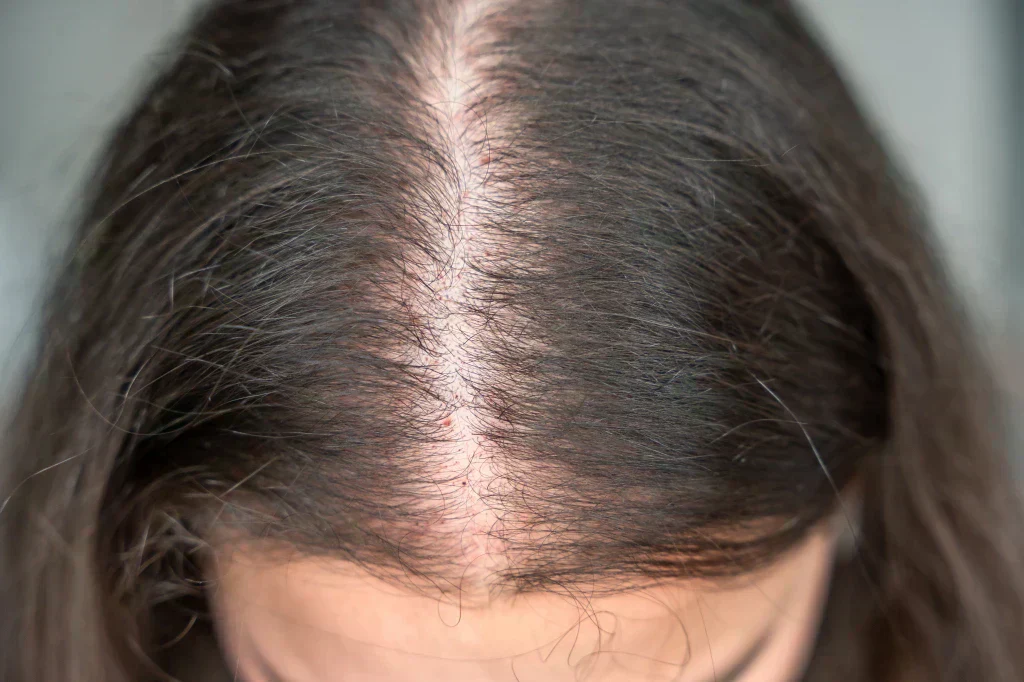
For most women experiencing female pattern hair loss, the process is insidious, starting not with dramatic shedding, but with a subtle change in the central parting.
The Christmas Tree Pattern: A Visual Guide
Initially, the hair part simply seems a bit wider. Over months or years, the widening accelerates toward the front of the scalp, creating a distinctive triangular or “Christmas tree” shape. This area of skin visibility is the result of surrounding hair follicles shrinking, causing the hair to provide less coverage.
Why Hair Density Changes in the Center
The center of the scalp is typically the most sensitive area to the hormones that cause miniaturization. Monitoring your part line is one of the easiest ways to self-assess the progress of thinning, especially when viewing photos over time.
Warning 2: The Receding or Changing Hairline (Often the First Sign in Men)
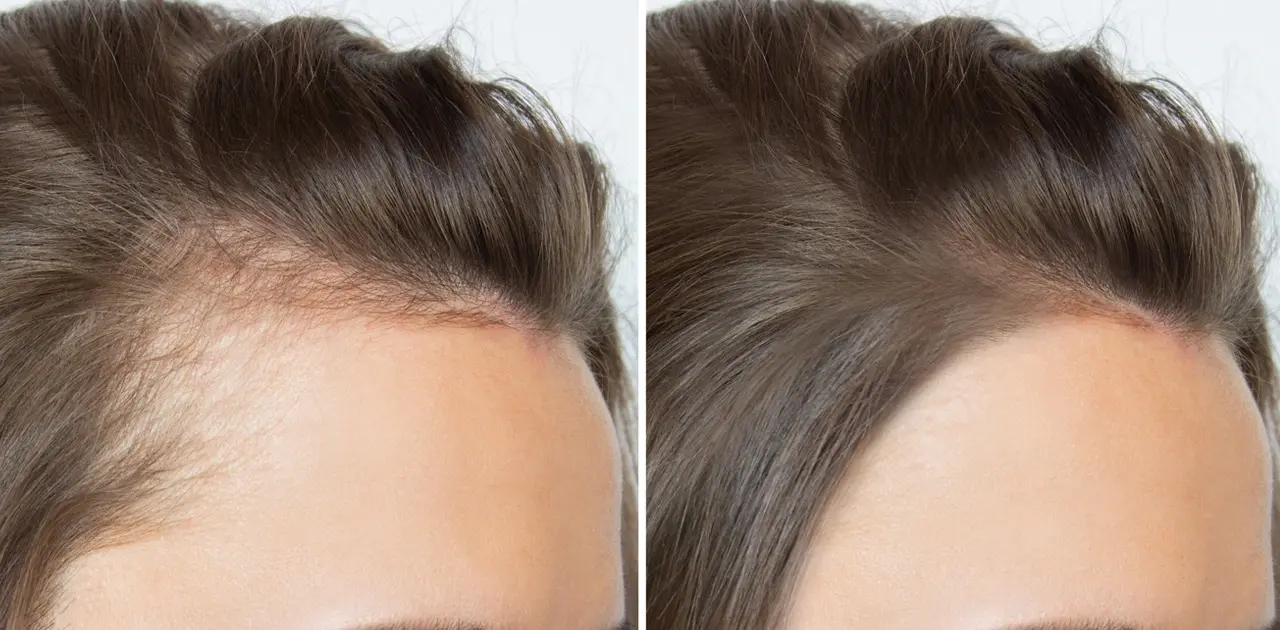
In men, the hairline is often the first battleground against progressive thinning. It’s important to distinguish between a natural maturing hairline and true recession.
Differentiating a Mature Hairline from a Receding Hairline
A mature hairline typically moves back slightly (about one finger-width) from the juvenile hairline, usually after puberty or in the early 20s, and then stops. A receding hairline is progressive; it continues to move backward, often forming a distinct ‘M’ or ‘V’ shape as the temples thin first.
The Norwood Scale (A Brief Overview)
Dermatologists and hair specialists use the Norwood scale to classify the extent of male pattern baldness. Early balding corresponds to Norwood Scale Stages I and II, which involve minimal recession and slight thinning at the crown. If you recognize this early M-shape, it’s time to consult a professional.
Warning 3: The Miniaturization Effect (The “Wispiness” of Hair)
Perhaps the most critical, yet frequently missed, early sign of pattern baldness is the degradation of the hair quality, not just the quantity.
Why Your New Hair Is Shorter and Finer Than Before
Hair miniaturization is the hallmark of Androgenetic Alopecia. As the follicle shrinks under hormonal influence, the active growth phase becomes shorter with each cycle. The result is that the hair it produces is no longer terminal (thick, pigmented) but becomes vellus (fine, light, and downy).
Loss of Hair Caliber and Diameter
You may notice that your hair feels thinner to the touch or doesn’t hold volume like it used to. This is because the diameter of the individual hair strands is reducing. This is a clear indicator that the follicle’s health is deteriorating.
Warning 4: Increased Scalp Visibility (Especially Under Light)
As the hair density drops and the remaining hairs become finer, light penetrates the scalp more easily, making thinning immediately apparent in certain conditions.
The Crown and Vertex: Common Thinning Zones
For men, thinning often concentrates at the crown (the vertex). For both men and women, the thinning is most obvious when hair is wet, or under harsh lighting (like fluorescent office lights or bright sunlight).
The “Spotlight” Effect: What Causes the Scalp to Show
When you can easily see the scalp through your hair in a well-lit mirror, your hair density has dropped significantly. This is past the point of subtle thinning and requires prompt action.
Warning 5: Excessive Shedding That Never Stops
While temporary shedding (Telogen Effluvium) resolves, pattern baldness can sometimes present with what feels like relentless, low-grade shedding that just doesn’t stop.
When Telogen Effluvium Turns Chronic
If a period of heavy shedding (TE) reveals an underlying tendency toward genetic thinning, the hair loss may never fully stop. The constant loss, combined with the growth of only finer, miniaturized hairs, leads to a net loss of density over time.
The Lack of Regrowth Cycle
The most worrying aspect of this perpetual shedding is the lack of healthy regrowth. When you see more hair falling out than the hair quality being restored, the balding process is actively advancing.
Why Early Intervention is Key (The Hair Follicle Window)
The opportunity to fully restore hair is greatest when the follicle is only miniaturized, not dormant. Once a follicle completely ceases production and the scalp scars over, non-surgical methods are no longer effective.
The Importance of Treating the Follicle Before it Becomes Dormant
Miniaturized follicles are like plants that are dehydrated and nutrient-starved. They are still alive and responsive to potent stimulation. Dormant follicles are like dead plants; they cannot be revived. Early intervention, therefore, aims to rescue and restore the health of these struggling follicles.
How PRP and Exosomes Support Early-Stage Balding
Treatments like PRP (Platelet-Rich Plasma) work by directly injecting a high concentration of the body’s own growth factors into the scalp. This creates an optimal environment that nourishes miniaturized follicles, prolongs the growth phase, and increases hair density and caliber. For early balding, PRP acts as a powerful preventative and reversal agent.
Complex Queries & Q&A on Hair Loss Progression
Q: If I start treatment when my hair is only slightly thin, will I experience a “shed” period? A: Sometimes. Treatments that trigger the hair cycle (like certain topicals or even sometimes the shock from the PRP injection itself) can temporarily push some old, weak hairs out to make room for stronger, thicker new hairs. This “initial shed” is a positive sign that the treatment is working and resetting the cycle.
Q: Can stress cause my genetic balding (AGA) to start earlier? A: Yes. While genetics determines the potential for balding, factors like severe stress (TE), poor diet, and hormonal shifts can act as accelerants. They can lower the overall volume of hair faster, making the underlying genetic thinning (AGA) appear years earlier than it might have otherwise.
Q: Are there any non-invasive tools I can use at home to check for miniaturization? A: While you cannot accurately measure follicle diameter at home, you can use a simple digital microscope or a high-quality magnifying glass to look at the hairs on your pillow. If you see many very short, thin, fine hairs (vellus) mixed in with the longer ones, it’s a strong non-professional indicator of miniaturization. A medical professional, however, uses a specialized device called a trichoscope for a precise diagnosis.